News
Vasseur says risk-taking changed Ferrari's 2026 car
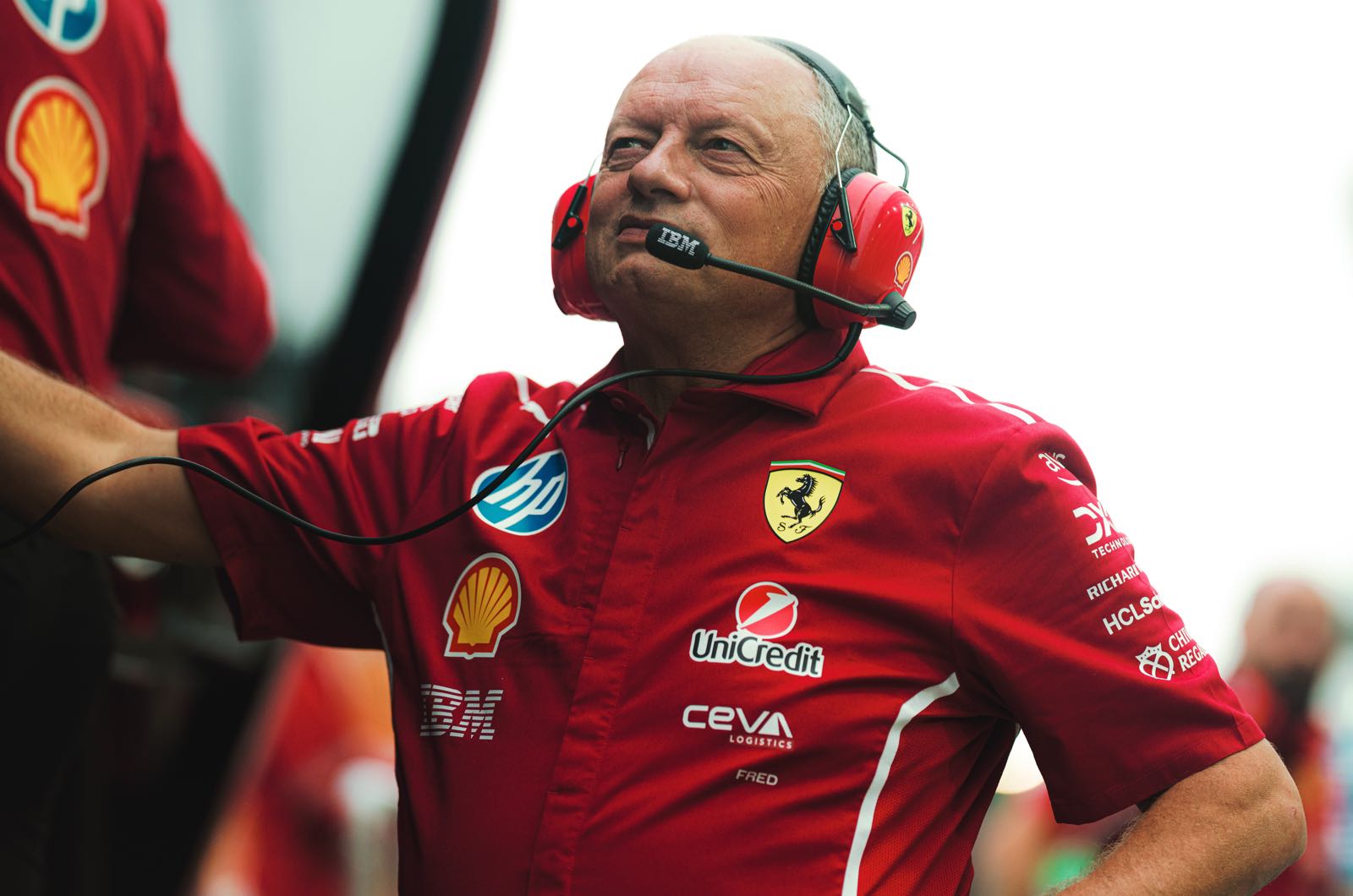
© Ferrari
The SF-26 attracted attention as soon as it appeared in Bahrain. It carried a small vane behind the exhaust, known internally as FTM, and later appeared with a rear-wing arrangement which rotated between its cornering and straight-line configurations.
The most visible devices were not necessarily the largest contributors to lap time, but they signalled a team more willing to pursue its own solutions. Rival versions of the rotating rear wing have since appeared at Red Bull and McLaren, while the exhaust treatment has also been studied and copied.
From day one I had the feeling that we have to take more risks,
Vasseur told Motorsport.com.
He said the change was intended to reach beyond the aerodynamic department. Ferrari has tried to apply the same thinking to development choices, car set-up and race strategy, accepting that some decisions will fail while the organisation becomes better at judging the odds.
That is more difficult under the cost cap. An unsuccessful development path now consumes not only time but a tightly controlled portion of a team's annual resources. Playing safe can preserve a budget, but it can also leave a series of small gains on the table.
Ferrari has experienced both sides of the argument this year. Charles Leclerc and Lewis Hamilton have each won with the SF-26, but some aggressive race decisions have been more successful than others.
Vasseur's larger point is that a team cannot learn to make good bold decisions without first being allowed to make them. For Ferrari, where the consequences of a mistake are usually amplified outside the factory, giving engineers visible support may be as important as any particular wing or vane.